

Comparing Ball Valves and Gate Valves for Industrial Use
In the industrial world, selecting the correct type of valve for fluid control can make a significant difference in efficiency, safety, and operational cost. Two of the most widely used valves are the Ball Valve and Gate Valve. This comprehensive blog will break down the critical differences between these two valve types and provide expert insights to help industries make informed decisions.
Understanding the Basics of Valves
What is a Ball Valve?
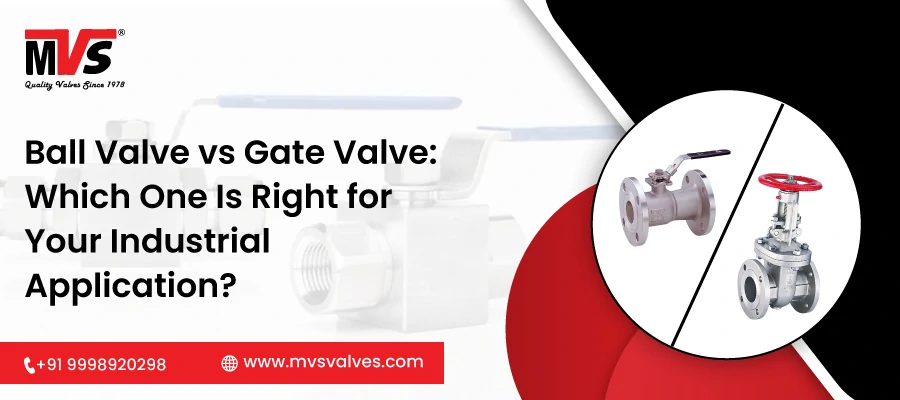
A Ball Valve is a quarter-turn valve that uses a hollow, perforated, and pivoting ball to control the flow of fluids. It is known for providing tight shut-off and is widely used in industries requiring quick shut-off mechanisms. The valve handle turns 90 degrees to open or close the valve.
What is a Gate Valve?
A Gate Valve uses a gate or wedge mechanism that moves up and down to start or stop the flow of fluid. Unlike ball valves, gate valves are not suitable for flow regulation. They are typically used in systems where the valve remains either fully open or fully closed.
Key Differences Between Ball Valve and Gate Valve
| Feature | Ball Valve | Gate Valve |
| Mechanism | Quarter-turn | Multi-turn |
| Shut-off Speed | Fast | Slow |
| Flow Control | On/Off & limited throttling | On/Off only |
| Size | Compact | Larger |
| Maintenance | Easier | Requires more effort |
| Pressure Handling | Excellent | Very good |
| Cost | Slightly higher | Cost-effective for larger sizes |
Detailed Look into Valves
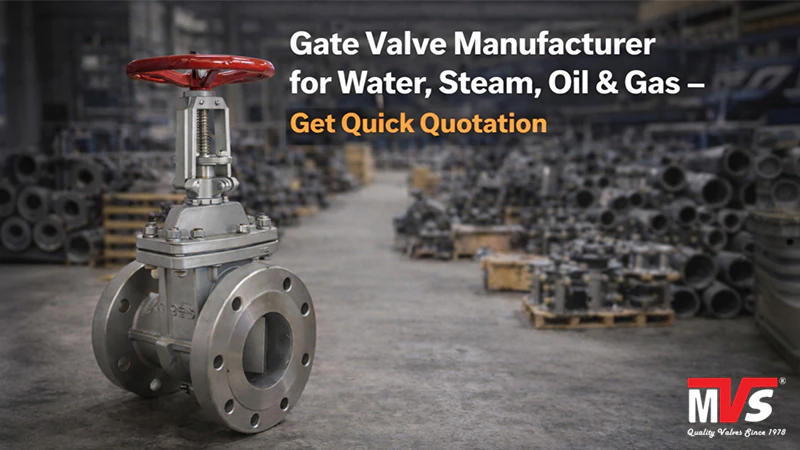
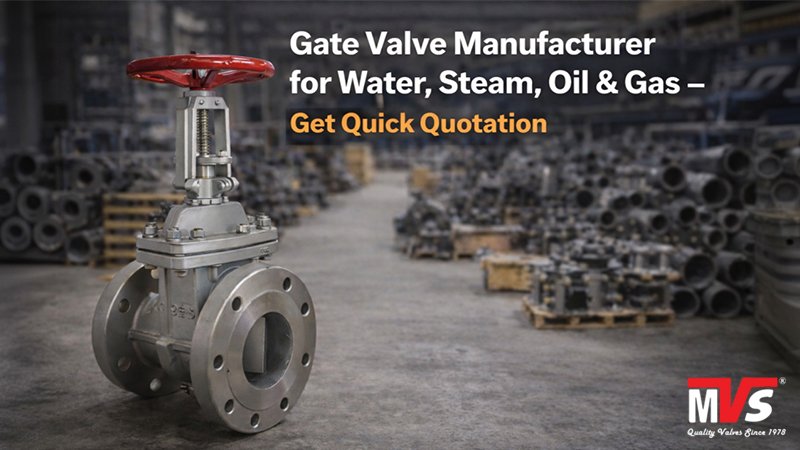
MVS Stainless Steel Gate Valve offers exceptional performance in industrial operations. They are manufactured in sizes ranging from 50 mm to 1500 mm, in ASME Pressure Classes 150, 300, 600, 900, and 1500. MVS Valve provides Stainless Steel Gate Valve options in Flanged, RTJ, and Butt Weld end connections. Available in various body and trim materials like WC6, WC9, LCB, LCC, C5, C12, and Duplex Stainless Steel, these valves offer a broad spectrum of applicability. The designs include Bolted Bonnet, Pressure Seal Bonnet, Welded Bonnet, and even Cryogenic Service.
MVS stainless steel gate valves feature an outside screw & yoke design with a rising stem and non-rising hand wheel. The straight-through bore design minimizes turbulence, erosion, and flow resistance. With a strong and reliable structure, they are ideal for heavy-duty industrial applications.
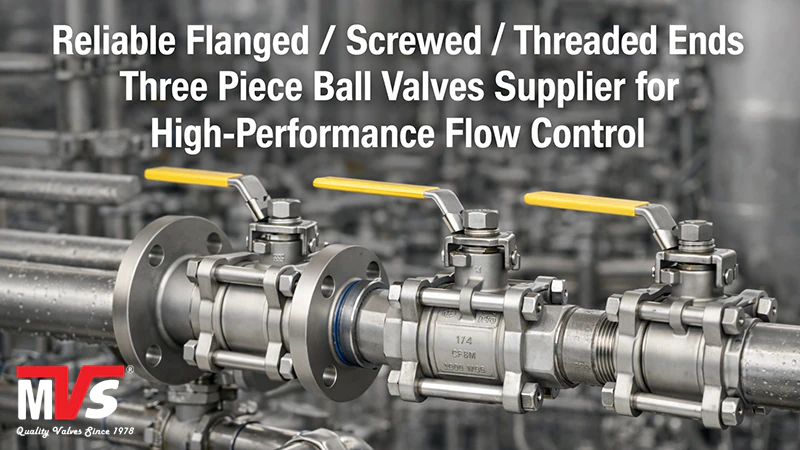
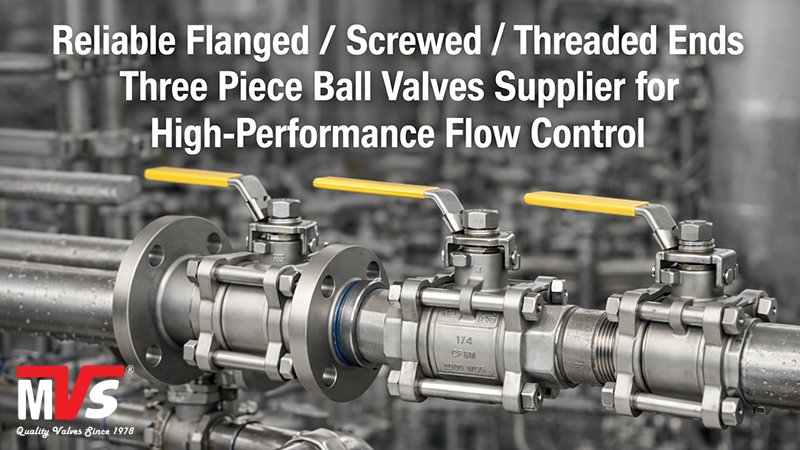
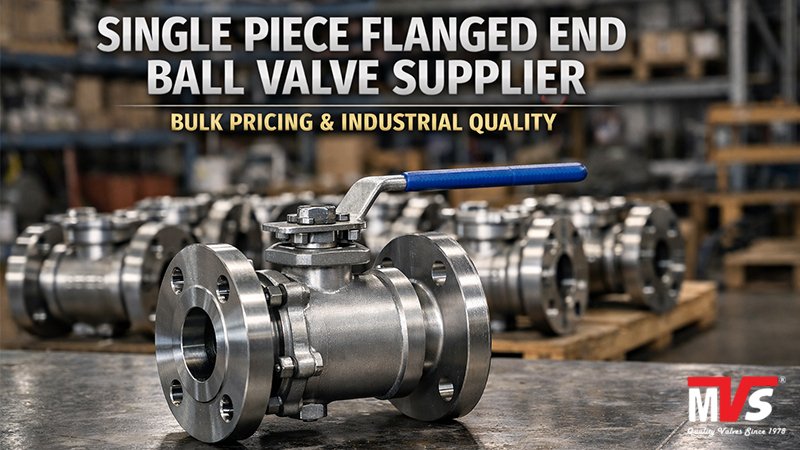
MVS Three Piece Ball Valve is designed with high precision and is available as a Two-Way Floating Ball design. It comes in full bore configuration in ASME Class 150 and 300, with flanged and threaded end connections. The size range starts from 15 mm to 300 mm.
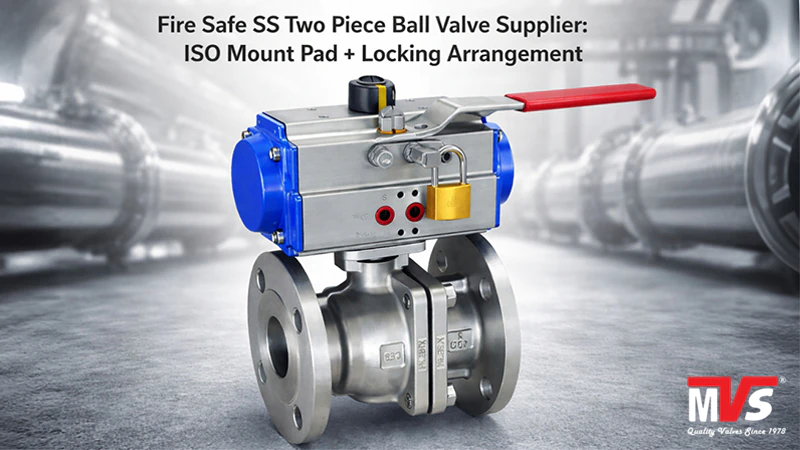
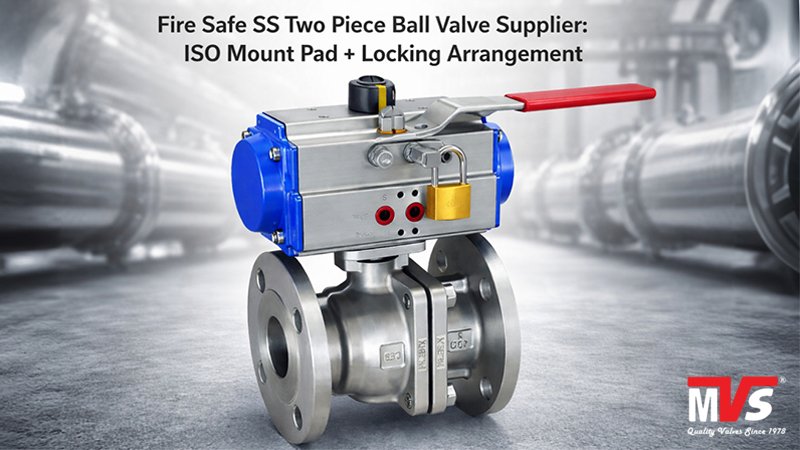
Manufactured in Carbon Steel, Stainless Steel, and Duplex Steel, the Three-Piece Ball Valve is also available in Fire Safe Design with ISO 5211 Actuator Mounting Base, making it suitable for automation.
Applications of Ball Valves
Oil and gas pipelines
Petrochemical facilities
Power generation plants
Water treatment units
Food & beverage industries
Pharmaceutical manufacturing
Applications of Gate Valves
Water supply systems
Power plants
Industrial gas systems
Chemical processing units
Mining operations
High-temperature, high-pressure systems
Benefits of Using Stainless Steel Gate Valves
Long-lasting and highly durable
Resistant to corrosion and extreme conditions
Suitable for large-scale industrial applications
Available in pressure seal and cryogenic versions
Benefits of Using Three Piece Ball Valves
Easy maintenance due to three-piece design
High-performance shut-off capabilities
Suitable for automation and high-cycle applications
Compatibility with a wide range of industrial fluids
Choosing Between Ball Valve and Gate Valve
If your application demands fast operation, tight shut-off, and minimal maintenance, a Ball Valve is your ideal choice. However, if your system requires a valve that will stay open for long periods and can handle larger sizes, a Gate Valve would be more suitable. In many critical industrial applications, a combination of both types might be used for maximum efficiency and safety.
Why Choose Us
MVS Valve is a trusted manufacturer and exporter of high-quality Ball Valves and Gate Valves. With decades of expertise in valve design and manufacturing, MVS Valve offers innovative and robust valve solutions to meet diverse industrial needs. Our stainless steel and three-piece valves are known for their durability, reliability, and high performance. Whether you’re working in oil & gas, chemical processing, or water treatment, MVS Valve has the perfect solution. Our commitment to quality, timely delivery, and technical support makes us a preferred partner across the globe.
Conclusion
Choosing between a Ball Valve and a Gate Valve depends on several factors including the nature of the fluid, operational requirements, space constraints, and maintenance considerations. Each has its strengths and is suitable for specific applications. With expert manufacturing and design capabilities, MVS Valve offers both types with customization and technical support to meet global industrial standards.
Want to know more about how to choose between Ball Valve vs Gate Valve for your specific application? Call us at +91 9998920298 or email us at mayurvalves@gmail.com.