
If you’ve ever had a valve fail in a chemical line, you already know the real cost isn’t the part itself. It’s the shutdown, the clean-up, the wasted product, the safety risk, and the stress that follows. That’s exactly why lined ball valves exist, and why so many process engineers and maintenance teams now refuse to compromise when it comes to chemical service.
At Mayur (Valves) System Private Limited, the focus is simple: supply a lined ball valve solution that fits real industrial conditions, not just catalogue promises. When your media is aggressive, acidic, corrosive, or hazardous, the right lining material and the right valve construction becomes the difference between smooth operations and repeated breakdowns.
Why Chemical Service Needs Lined Ball Valves (Not Ordinary Valves)
In most industrial plants, the valve is a small component with a massive responsibility. It controls flow, isolates media, protects equipment, and helps operators keep processes stable. But in chemical service, ordinary metal valves face a constant battle.
Acids, solvents, chlorinated media, and reactive fluids don’t just “wear” a valve slowly. They attack it. Over time, internal corrosion reduces sealing performance, creates pitting, causes torque increase, and leads to leakage. And once leakage starts in a chemical line, the entire risk profile changes.
That’s where fluoropolymer lined ball valves make sense. Instead of letting metal sit directly in contact with aggressive media, the valve interior is protected by a chemical-resistant lining. The result is better durability, safer shutoff, and longer service life in corrosive environments.
Understanding What a PTFE Lined Ball Valve Really Offers
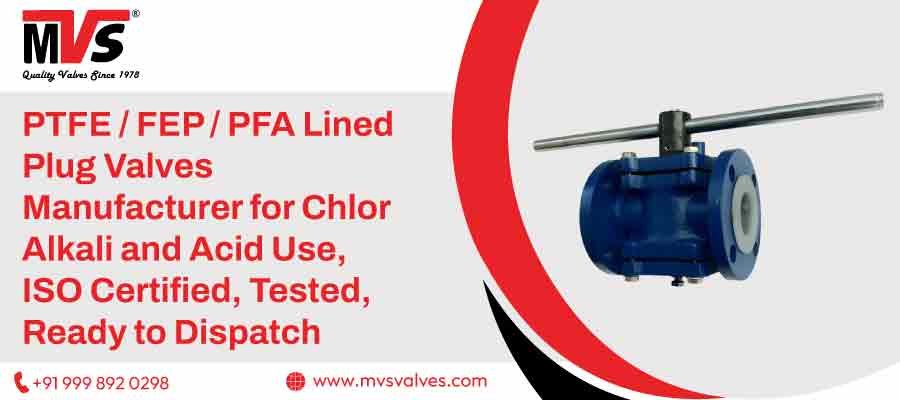
A PTFE Lined Ball Valve is built for applications where corrosion resistance and reliable shutoff are non-negotiable. PTFE (Polytetrafluoroethylene) is widely used because it offers excellent chemical resistance across many industrial fluids.
At Mayur (Valves) System Private Limited, the PTFE lined design is engineered for handling corrosive, acidic, and hazardous chemical media. The valve body is constructed from cast ductile iron with a high-performance PTFE lining. That body choice gives the valve strength, while the lining protects it from chemical attack. The most important point is this: the lining is not a “nice extra”. In chemical service, it’s the working surface of the valve. That’s why lining quality, thickness consistency, and bonding reliability matter so much.
A PTFE Lined Ball Valve is also known for delivering stable sealing, smooth flow, and compatibility with demanding process conditions. For industries like chemical processing, petrochemicals, pharmaceuticals, and water treatment, this is a proven flow control approach. And yes, it’s also one of the most cost-effective ways to get high chemical resistance without moving to exotic alloys.
Full Port Design: Why Flow Matters More Than People Think
One major feature in the MVS design is the full port structure. A full port valve provides unrestricted flow through the bore, which helps in two important ways.
First, it reduces pressure drop. That keeps pump load stable and avoids unexpected process fluctuations. Second, it supports smoother flow of viscous or particle-carrying media, where restricted bores can cause build-up and performance loss over time. When you combine full port flow with chemical-resistant lining, you get a valve that doesn’t just survive aggressive media but also supports consistent process efficiency.
The Value of split body two-piece construction in Real Maintenance
A major reason buyers prefer this valve design is the split body two-piece construction. It sounds like a small technical detail, but it makes a huge difference in practical maintenance. In many industrial sites, downtime is expensive and maintenance windows are short. A valve that supports easier disassembly and service becomes a smarter long-term investment. The split body two-piece construction improves structural integrity while also helping maintenance teams access internal components more easily.
For procurement teams, this means lower lifecycle cost. For maintenance teams, it means less time fighting a valve that wasn’t designed to be serviced. And for plants with strict safety standards, it also reduces the chances of risky makeshift repairs.
Why a replaceable PTFE seat is a Big Deal
One of the most valuable features for chemical applications is the replaceable PTFE seat. Over time, even the best valve seats can experience wear, especially if the line cycles frequently or the media carries minor solids. With a replaceable PTFE seat, you don’t need to replace the entire valve just because the seat has reached its wear limit. You can restore performance by replacing the seat, which is both economical and practical.
This design supports bubble-tight shutoff under various operating conditions, which is exactly what plants need when dealing with hazardous chemical media. For buyers comparing options, a replaceable PTFE seat is one of those features that quietly saves money year after year.
Operation Options That Match Real Plant Needs
Not every valve size can be operated the same way, and pretending otherwise is how you end up with operator frustration and inconsistent control. That’s why the MVS PTFE lined ball valve includes two operation formats depending on size.
manual lever operation up to 100 mm: For smaller sizes, manual lever operation up to 100 mm offers fast and direct control. It’s simple, reliable, and ideal for systems where operators need quick isolation.
worm gear operation from 150 mm to 300 mm: For larger sizes, torque requirements increase. That’s why worm gear operation from 150 mm to 300 mm is available, giving smooth control and safer operation. Both of these options are designed to support consistent shutoff without forcing operators to struggle with the valve, which is honestly more common in plants than people admit.
Why low torque operation Improves Safety and Valve Life
Torque is one of those topics that gets ignored until something goes wrong. When torque increases, operators apply more force. When operators apply more force, internal components wear faster. Then sealing performance drops, and the cycle continues. This is why low torque operation matters so much in lined ball valves. With low torque operation, you get smoother control, reduced wear, and better long-term performance.
In practical terms, it also means fewer maintenance complaints and fewer “this valve is stuck again” calls. For chemical lines where shutoff reliability is critical, low torque operation is not just comfort. It’s safety.
What Makes a glandless design Safer in Hazardous Media
When chemical media is hazardous, even small leakage points matter. One key safety-focused feature is the glandless design. A glandless design reduces the risk of leakage from traditional gland packing areas. This becomes especially valuable in high-risk applications where even minor emissions are unacceptable.
In chemical processing and pharmaceutical environments, safety and compliance are closely linked. The glandless design helps support both. It’s also one of the reasons why plants working with aggressive fluids often prefer this type of valve configuration for critical lines.
The Core Requirement: corrosion, acid, and chemical resistance
Everything about this product comes down to one demand: corrosion, acid, and chemical resistance. In real industrial conditions, chemical exposure is not always stable. Some lines run mixed media. Some run hot and cold cycles. Some run cleaning chemicals during CIP processes.
That’s why the valve is engineered specifically for corrosion, acid, and chemical resistance in corrosive and hazardous chemical media. When you choose a lined valve, you’re not only protecting the valve. You’re protecting the entire system from the chain reaction that happens when corrosion starts leaks, contamination, downtime, and safety incidents. A properly selected lined ball valve is one of the simplest ways to stabilise chemical operations.
Lining Material Options Beyond PTFE: Matching Media Compatibility
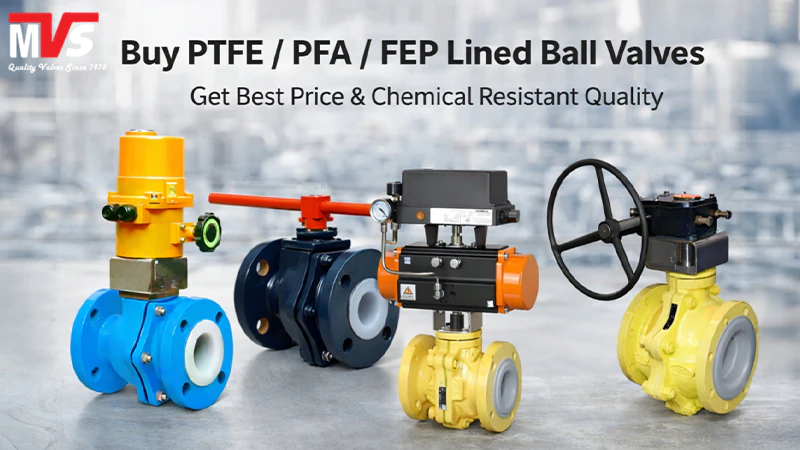
While PTFE is a strong and widely trusted option, many plants require different lining choices depending on media compatibility. That’s why the MVS range includes multiple fluoropolymer and plastic lining variants.
- PFA Lined Ball Valves: PFA Lined Ball Valves are used when applications demand high chemical resistance and stable performance. For many chemical plants, PFA Lined Ball Valves offer excellent compatibility with aggressive media.
- FEP Lined Ball Valves: FEP Lined Ball Valves are another fluoropolymer option, chosen based on process requirements. Many buyers consider FEP Lined Ball Valves for chemical lines where fluoropolymer protection is needed with dependable flow control.
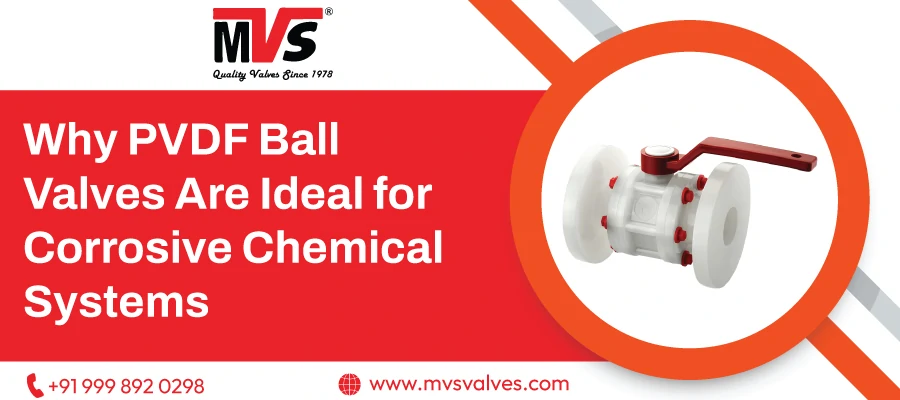
- PVDF Lined Ball Valves: PVDF Lined Ball Valves provide a different lining option for certain media compatibility requirements. In systems where process engineers prefer PVDF lining properties, PVDF Lined Ball Valves become a practical choice.
- Polypropylene (PP) Lined Ball Valves: For specific chemical services, Polypropylene (PP) Lined Ball Valves are also used. Polypropylene (PP) Lined Ball Valves are selected when the media compatibility supports PP lining as a suitable option. The key point is simple: lining material is not “one size fits all”. It should match the actual media and operating conditions.
That’s why procurement teams often prefer suppliers like Mayur (Valves) System Private Limited who can support multiple lining ranges instead of forcing a single option into every application.
The Broader Category: fluoropolymer lined ball valves for Industrial Stability
The term fluoropolymer lined ball valves covers PTFE, PFA, and FEP lined solutions. These linings are widely valued because they protect against aggressive fluids and maintain stable internal surfaces over long-term exposure.
In chemical processing, stable internal surfaces mean stable performance. It reduces the chance of scaling, sticking, corrosion pitting, and sealing failure.
That’s why fluoropolymer lined ball valves are a preferred option in industries where metal-to-media contact is simply not acceptable. When you’re buying for chemical service, the best approach is to treat fluoropolymer lined ball valves as a long-term reliability investment, not a short-term purchase.
Where Fluorine Lined Ball Valves Fit in Plant Applications
Many buyers also search for Fluorine Lined Ball Valves, especially when sourcing for corrosive and aggressive chemical service. In practical industry usage, Fluorine Lined Ball Valves is often used as a general term to describe fluoropolymer lined valves designed for chemical resistance and stable operation.
For procurement teams, this keyword matters because it reflects a buying intent: chemical resistance, safety, and long service life. And in real plants, Fluorine Lined Ball Valves are selected because they reduce corrosion risk and support consistent shutoff performance in harsh media.
Why People Also Call Them Fluorocarbon Resin Lining Ball Valves
Another term used in industrial sourcing is Fluorocarbon Resin Lining Ball Valves. This naming often appears in technical documents and procurement lists, especially when referring to high-endurance lined valve requirements.
From a functional perspective, Fluorocarbon Resin Lining Ball Valves are valued for their ability to handle aggressive fluids while maintaining sealing reliability. If you are comparing suppliers, it’s worth checking that the valve you are buying matches the actual construction and lining quality required, not just the name used in a quotation.
Selecting the Right Lined Ball Valve: A Simple Buyer View
Most buyers don’t need complicated theory. They need a valve that fits their system and performs safely. If you’re sourcing lined ball valves for chemical service, focus on these practical factors:
- Correct lining type for media compatibility
- Full port flow requirement
- Maintenance-friendly body design
- Reliable seat and shutoff performance
- Operation type based on valve size
- Safety-focused sealing and emission control
This is where Mayur (Valves) System Private Limited stands out because the product design includes real maintenance and operational features like split body two-piece construction, replaceable PTFE seat, low torque operation, and a glandless design.
Major Valve Body Materials, Compositions & Applications
Even when you choose a lined valve, the valve body material still plays a big role in overall performance, durability, and suitability for your plant environment. The lining protects internal surfaces from aggressive media, but the body must still handle pressure, temperature variation, mechanical stress, and external exposure. In chemical processing, pharmaceuticals, petrochemicals, and water treatment systems, selecting the right valve body material helps reduce long-term maintenance issues and improves reliability in demanding service conditions.
Valve Body Materials (Common Types & Where They’re Used)
ASTM A351 gr. CF8M 316 Stainless Steel: Type 316 is a corrosion resistant molybdenum alloy known for improved resistance to pitting in solutions containing chlorides and other halides. It also offers strong elevated temperature performance, tensile strength, creep strength, and resistance to stress and rupture, making it suitable for harsh industrial service.
ASTM A216 gr. WCB Carbon Steel: A widely used body material for standard service applications. It is commonly supplied with CR13SS/ stellite or 316SS trim, and the body is externally coated to protect against weather exposure in industrial environments.
ASTM A216 gr. LCB: This material is used for standard service where similar corrosion properties to WCB are required, but a lower temperature rating is needed. It is typically selected for applications requiring performance down to -46°C.
ASTM A351 gr. CF3M 316L Low Carbon Stainless Steel: Type 316L contains 0.03% carbon or less and is recommended when exposure in the carbide precipitation range cannot be avoided. It is especially useful where annealing after welding is not practical, making it a common choice for welded systems.
ASTM A351 gr. CF8 304 Stainless Steel: A general-purpose corrosion resistant alloy with low carbon content and non-magnetic properties. It is commonly used in many industrial environments, though it may be susceptible to chloride stress corrosion cracking in certain conditions.
ASTM A351 gr. CF3 304L Low Carbon Stainless Steel: Type 304L also has a carbon content of 0.03% or less and can be used in the as-welded condition without becoming susceptible to inter-granular corrosion. Like 304, it may still be vulnerable to chloride stress corrosion cracking and is commonly used where field working is required.
ASTM A351 gr. CN7M Alloy 20: Alloy 20 is known for superior resistance to stress corrosion cracking, especially in boiling 20 to 40% sulphuric acid. It also provides strong general corrosion resistance to sulphuric acid, excellent resistance to chloride stress corrosion cracking, and good mechanical strength and fabricability.
ASTM A296 gr. CW-12M Hastelloy C: Hastelloy C offers outstanding corrosion resistance in oxidising environments. It provides excellent resistance to pitting and stress corrosion cracking and maintains corrosion resistance in weld joints, making it suitable for high-endurance chemical service.
ASTM A296 gr. M-35 Monel: Monel is widely valued for superior corrosion resistance in many chemical applications and excellent resistance to salt water. It is often chosen for marine-related industrial environments and highly corrosive services.
Available Valve Body Material Categories
In industrial supply and project sourcing, valves are commonly available in the following body material categories, depending on service conditions and system requirements:
Carbon Steel, Low Temperature Carbon Steel, Low Alloys, 13%Cr Stainless Steel, Austenitic Stainless Steel, Precipitation Hardening Stainless Steel, Duplex & Super Duplex Stainless Steel, Bronze, Ni Alloys (825, 625, 718), and Titanium.
Global Supply Reach: Serving Key International Markets
Valves made in India support a wide global market, and this demand continues to grow because many plants need dependable performance across different standards, industries, and operating conditions. Today, Indian-manufactured valves are supplied across Australia, the United States (USA), Canada, Mexico, Belgium, Germany, the European Union, the Netherlands, Spain, France, the UK, Denmark, Sweden, Finland, Poland, Austria, the Czech Republic, Romania, and Italy. In the Middle East, they are supplied to the United Arab Emirates, Qatar, Saudi Arabia, Oman, Bahrain, and Kuwait. Across Africa, they serve Egypt, Nigeria, Kenya, South Africa, Morocco, Tunisia, Ethiopia, Uganda, Tanzania, and more. In Asia and nearby regions, they reach Indonesia, Vietnam, Malaysia, Thailand, the Philippines, Singapore, Kazakhstan, Sri Lanka, Japan, South Korea, and others. They also reach New Zealand, Costa Rica, Colombia, Argentina, Chile, Guyana, Brazil, Panama, Azerbaijan, Turkey, Israel, Ireland, Greece, Jordan, Lebanon, Trinidad and Tobago, the Kyrgyz Republic, and Uzbekistan, showing strong suitability across many plant conditions and global requirements.
Why Choose us
Choosing the right supplier for lined valves is not only about price. It’s about getting a valve that performs exactly as expected when installed in aggressive chemical service. Mayur (Valves) System Private Limited supplies lined ball valves engineered for corrosive and hazardous media, built with practical features that plant teams actually need, such as split body two-piece construction for easier maintenance and a replaceable PTFE seat for long-term shutoff reliability.
The range covers PTFE Lined Ball Valve solutions as well as PFA Lined Ball Valves, FEP Lined Ball Valves, PVDF Lined Ball Valves, and Polypropylene (PP) Lined Ball Valves, so buyers can match lining selection to media compatibility instead of forcing a single option. When you work with Mayur (Valves) System Private Limited, you get a product designed for corrosion, acid, and chemical resistance, with operation options that suit real plant sizes, from manual lever operation up to 100 mm to worm gear operation from 150 mm to 300 mm.
Conclusion
A lined ball valve is not a luxury in chemical service. It’s one of the smartest ways to protect your process line from corrosion, leakage, and shutdown risks. A PTFE Lined Ball Valve offers strong chemical resistance, reliable shutoff, and smooth operation when built with the right construction and sealing design. Features like split body two-piece construction, a replaceable PTFE seat, low torque operation, and a glandless design make the valve easier to maintain and safer to operate. With options including PFA Lined Ball Valves, FEP Lined Ball Valves, PVDF Lined Ball Valves, and Polypropylene (PP) Lined Ball Valves, you can match lining to media compatibility for better long-term performance. For serious chemical applications, choosing the right valve upfront saves cost, stress, and risk later.
For the best price on chemical resistant lined ball valves, contact Mayur (Valves) System Private Limited today. Call +91 9998920298 or Email: mayurvalves@gmail.com for product details, sizing, and quick support.
Key Takeaways
- A PTFE Lined Ball Valve is ideal for corrosive, acidic, and hazardous chemical media.
- split body two-piece construction supports easier servicing and stronger structure.
- replaceable PTFE seat helps maintain bubble-tight shutoff without replacing the whole valve.
- manual lever operation up to 100 mm and worm gear operation from 150 mm to 300 mm match real plant valve sizes.
- Lining choices like PFA Lined Ball Valves and FEP Lined Ball Valves allow proper media compatibility selection.
FAQs
What is the main benefit of a PTFE lined valve in chemical service?
A PTFE Lined Ball Valve protects the valve internals from corrosive media, improving shutoff reliability and reducing corrosion-related failures.
Why is split body two-piece construction useful for industrial plants?
split body two-piece construction supports easier maintenance access, which helps reduce downtime during servicing.
When should I choose worm gear operation instead of a lever?
worm gear operation from 150 mm to 300 mm is preferred for larger valves where manual force would be difficult and less safe.
Do I need PFA or FEP lining instead of PTFE?
It depends on your media compatibility requirements. PFA Lined Ball Valves and FEP Lined Ball Valves are selected when process conditions demand those lining properties.
What makes glandless design important in hazardous applications?
A glandless design reduces leakage risk from packing areas, which is valuable when handling aggressive or hazardous chemical media.