

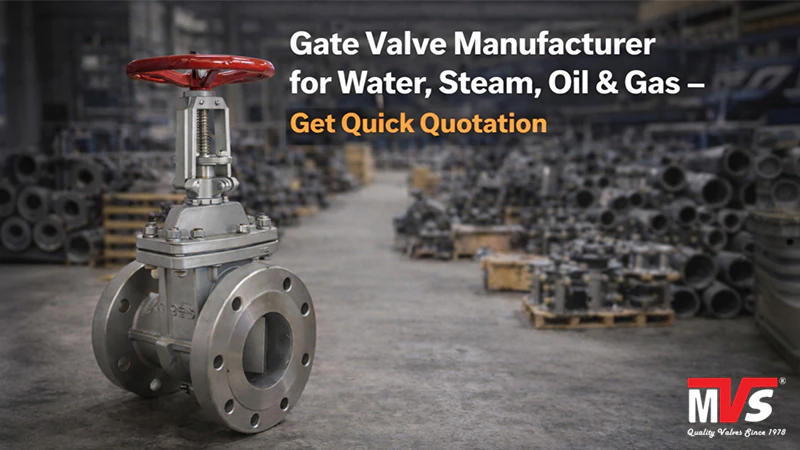
There’s a moment every engineer, project manager, or procurement team recognises instantly. You’re not looking for “a valve” anymore — you’re looking for the right gate valve, from a supplier who actually understands the service conditions. Water lines need reliability. Steam needs strength. Oil & gas operations demand tight shut-off, the right pressure rating, and total confidence that the valve will perform exactly as intended once it’s installed in the pipeline.
That’s why gate valves are still one of the most widely used valve types in industrial piping systems. They are simple in concept, but they are not simple in performance. A poorly selected gate valve can lead to leakage, pressure drops, maintenance cycles that never end, and the worst one — unexpected downtime.
Why Gate Valves Still Dominate Water, Steam, and Oil & Gas Pipelines
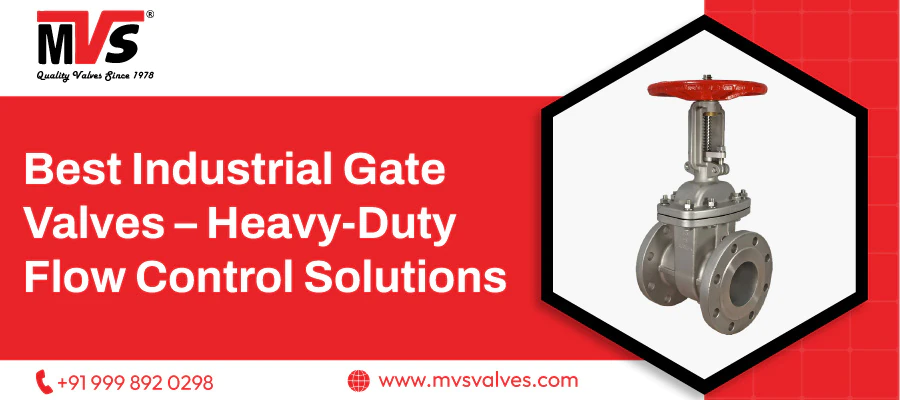
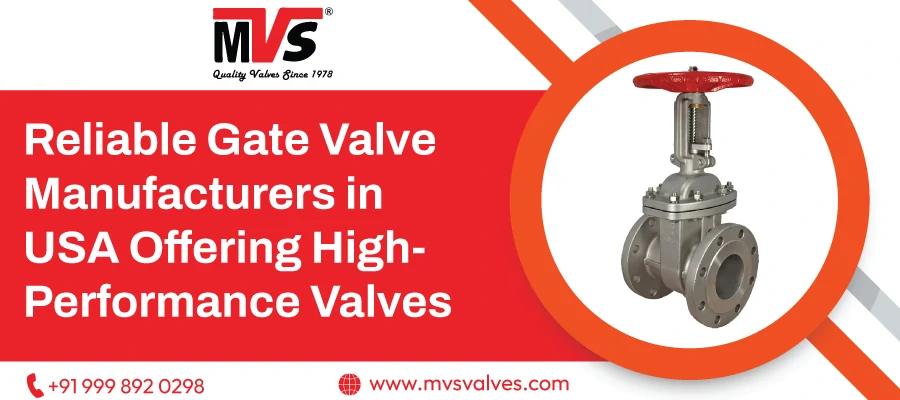
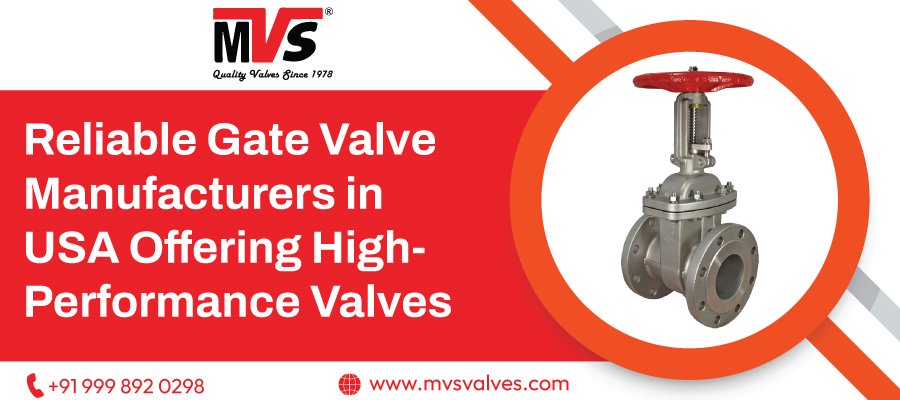
Gate valves have stayed relevant for decades for one simple reason: when fully open, they allow straight-through flow with minimal restriction. That makes them a practical choice for isolation duty in many systems.
In water distribution and industrial utilities, a gate valve is often used to isolate a section of pipeline for maintenance. In steam service, gate valves are used in high-temperature systems where strength and pressure handling matter. In oil & gas, they are selected for their shut-off performance, standardised dimensions, and compatibility with widely used piping standards.
But the real story is this: gate valves work brilliantly when they are chosen correctly for pressure class, end connection, body material, and API design standard. When they’re not, they can become one of the most expensive “small parts” in the whole plant.
That’s why many buyers today actively search for Gate Valve Manufacturers exporters from India — because Indian manufacturers are supplying across global markets with widely accepted standards, while offering practical availability and competitive supply support.
Forged vs Cast Gate Valves
Before you even look at pressure class or end connections, you usually need to decide whether your application is better suited to forged or cast construction.
Forged gate valves are commonly used for smaller sizes and higher-pressure classes. They are typically selected in steam lines, high-pressure process lines, and applications where compact, strong construction is preferred.
Cast gate valves are commonly used in larger pipeline sizes, particularly in water distribution networks, general industrial piping, and many oil & gas applications where flanged connections and standard pressure ratings are needed.
At Mayur (Valves) System Private Limited, we support both forged and cast gate valve ranges, because real plants don’t operate on one standard alone. Different sections of the same facility may require completely different gate valve specifications.
FORGED GATE VALVES for Compact High-Pressure Service
When your project involves high pressure and tight space, FORGED GATE VALVES are often the natural fit. These valves are frequently chosen for steam, oil & gas, chemical lines, and critical utility services where the valve needs to hold pressure reliably over long cycles.
The reason FORGED GATE VALVES remain so widely specified is because they are available in standardised API patterns and high-pressure classes. They also suit multiple end connection types such as flanged, screwed, socket weld, and butt weld.
For buyers comparing options, forged valves are not “better” than cast valves — they’re simply designed for different operating realities. And in high-pressure service, that difference becomes very real very quickly.
API 602 Gate Valves: The Standard Behind Most Forged Gate Valves
API 602 is one of the most common standards used for forged steel gate valves. It defines the design requirements for compact, high-pressure forged valves commonly used in steam lines and oil & gas piping systems.
If your project is in refinery piping, high-pressure steam, upstream oil & gas skids, or high-temperature process units, API 602 gate valves are often part of the standard valve list. At Mayur (Valves) System Private Limited, we supply multiple forged API 602 configurations in different materials, end types, and pressure classes to match project requirements.
A105 Forged Steel Gate Valves for Standard Industrial Pressure Class
One of the most common forged steel gate valve requirements in industrial projects is A105 FORGED STEEL API 602 GATE VALVES FLANGED ENDS CLASS 150. This configuration is often used where the system pressure is moderate and where flanged installation is preferred for easy removal and maintenance.
A105 FORGED STEEL API 602 GATE VALVES FLANGED ENDS CLASS 150 are commonly specified in general industrial steam lines, water and utility piping, and many oil & gas support systems.
This is one of those “workhorse” valve specifications that appears again and again in real project BOQs. And when buyers search for quick quotation support, this is often the first item on their list.
F304L Forged Stainless Steel Gate Valves for Corrosion-Prone Service
For corrosion-prone environments, stainless steel becomes an obvious upgrade. Many industries prefer low carbon stainless grades to support welded installations and reduce sensitivity in certain conditions.
That’s why F304L FORGED STAINLESS STEEL API 602 GATE VALVES FLANGED ENDS CLASS 300 are commonly used for industrial applications requiring improved corrosion resistance at a higher-pressure class.
F304L FORGED STAINLESS STEEL API 602 GATE VALVES FLANGED ENDS CLASS 300 are frequently used in chemical plants, process utilities, and industrial water systems where corrosion risk is higher than standard carbon steel service.
The advantage here is simple: better corrosion resistance, a higher-class rating, and a forged construction format that suits compact high-pressure piping.
F316L Forged Stainless Steel Gate Valves for More Aggressive Conditions
When the service becomes more chemically aggressive or when long-term corrosion resistance becomes a higher priority, many projects move from 304L to 316L.
In these cases, F316L FORGED STAINLESS STEEL API 602 GATE VALVES FLANGED ENDS CLASS 600 are a common specification.
F316L FORGED STAINLESS STEEL API 602 GATE VALVES FLANGED ENDS CLASS 600 are commonly used in demanding oil & gas services, process plants, and high-pressure applications where both corrosion resistance and pressure rating are critical.
This is the kind of valve that is rarely chosen casually. When it appears in a project list, it usually means the engineer knows exactly what the line conditions demand.
Forged Alloy Steel Gate Valves for High Temperature and High Pressure
In high-temperature steam and oil & gas service, alloy steels are commonly selected because they perform better under elevated temperatures than standard carbon steel.
For threaded and compact high-pressure lines, F11 FORGED ALLOY STEEL API 602 GATE VALVE SCREWED ENDS CLASS 800 is a widely recognised requirement.
F11 FORGED ALLOY STEEL API 602 GATE VALVE SCREWED ENDS CLASS 800 is often selected for steam and high-pressure service where screwed ends are acceptable and where alloy steel performance is required.
For even higher-pressure service with a stronger connection, F22 FORGED ALLOY STEEL API 602 GATE VALVE SOCKET WELD ENDS CLASS 1500 becomes a key option.
F22 FORGED ALLOY STEEL API 602 GATE VALVE SOCKET WELD ENDS CLASS 1500 is typically specified in critical lines where socket weld ends provide a compact, strong joint and where the pressure class demands a high-integrity valve. And when the requirement becomes extreme pressure, LF2 FORGED CARBON STEEL API 602 GATE VALVE BUTT WELD ENDS CLASS 2500 is a specification that appears in high-pressure industrial projects.
LF2 FORGED CARBON STEEL API 602 GATE VALVE BUTT WELD ENDS CLASS 2500 is chosen where butt weld ends are preferred for pipeline integrity and where very high-pressure ratings are required.
API 600 Gate Valves: The Standard for Cast Steel Gate Valves
API 600 is one of the most widely used standards for cast steel gate valves. It covers requirements for flanged and butt weld end gate valves used across industrial systems.
If your project involves standard pipeline sizes, flanged installation, and common pressure classes, API 600 gate valves are often the most familiar choice.
At Mayur (Valves) System Private Limited, our API 600 range supports widely used specifications, including cast carbon steel, stainless steel, and duplex steel configurations.
Cast Carbon Steel Gate Valves for Industrial Water and Oil & Gas
One of the most common industrial requirements is API 600 CAST CARBON STEEL GATE VALVE FLANGED ENDS CLASS 150.This valve is commonly used in water pipelines, industrial utility systems, and across a broad range of standard oil & gas services.
API 600 CAST CARBON STEEL GATE VALVE FLANGED ENDS CLASS 150 is popular because it matches standard piping systems and supports practical installation and maintenance.
For higher pressure systems requiring stainless steel, API 600 STAINLESS STEEL GATE VALVE FLANGED ENDS CLASS 300 is a widely used option.
API 600 STAINLESS STEEL GATE VALVE FLANGED ENDS CLASS 300 is often chosen in industrial environments where corrosion resistance is needed and where Class 300 is part of the piping requirement. And for even higher-pressure class combined with premium corrosion resistance, API 600 DUPLEX STEEL GATE VALVE FLANGED END CLASS 600 becomes a key specification.
API 600 DUPLEX STEEL GATE VALVE FLANGED END CLASS 600 is frequently used in harsh environments where both strength and corrosion resistance are important.
API 603 Gate Valves: Corrosion-Resistant Cast Gate Valve Designs
API 603 is commonly associated with corrosion-resistant gate valve designs, often used in stainless steel and corrosion-resistant applications.
For carbon steel corrosion-resistant designs, API 603 CORROSION RESISTANT CAST CARBON STEEL GATE VALVE is widely referenced in industrial projects.
API 603 CORROSION RESISTANT CAST CARBON STEEL GATE VALVE is typically selected where a corrosion-resistant design is needed while still using carbon steel construction.
For stainless steel corrosion-resistant designs, API 603 CORROSION RESISTANT STAINLESS STEEL GATE VALVE is the preferred specification.
API 603 CORROSION RESISTANT STAINLESS STEEL GATE VALVE is widely used in industries where corrosion is a major concern, such as chemical plants, marine service, and aggressive process environments.
Flexible Wedge Gate Valves: Designed for Better Sealing in Real Conditions
A flexible wedge design is often chosen because it supports better seating and sealing under thermal variation and operational conditions where slight distortion could affect performance.
That’s exactly why FLEXIBLE WEDGE OUTSIDE SCREW AND YOKE BOLTED BONNET API 600 GATE VALVES are widely specified across water networks, steam lines, and a broad range of oil & gas service. In many industrial plants, this design is considered one of the most dependable formats for isolation duty.
Gate Valve Manufacturers exporters from India: Why Global Buyers Keep Searching This Term
There’s a reason international procurement teams keep searching for Gate Valve Manufacturers exporters from India. Indian-made valves are supplied to a wide range of global markets, across many standards and plant conditions.
For buyers, the advantage is not just pricing. It’s also about availability, export support, and the ability to supply valves built to recognised standards such as API 600, API 602, and API 603.
At Mayur (Valves) System Private Limited, we support customers looking for reliable supply and quick quotation support, especially for project requirements where timelines are tight.
This is also why Gate Valve Manufacturers exporters from India has become a strong search intent keyword for global buyers.
How to Get the Right Gate Valve Quotation Without Wasting Time
Gate valve quotations become slow when information is missing. In most cases, you can speed it up simply by confirming a few practical points:
- API standard required (API 600 / API 602 / API 603)
- Pressure class options include 150, 300, 600, 800, 1500, and 2500.
- End connection (flanged / socket weld / butt weld / screwed)
- Material requirement (A105 / F304L / F316L / F11 / F22 / LF2 / duplex)
- Application (water / steam / oil & gas)
This isn’t about paperwork. It’s about matching the correct gate valve to the correct pipeline conditions, so the product performs properly after installation.
Major Valve Body Materials, Compositions & Applications
Valve body material selection has a direct impact on corrosion resistance, temperature capability, mechanical strength, and long-term service life. Below are some of the most common industrial valve body material types and their typical applications, widely referenced across water, steam, oil & gas, chemical, and process industries.
ASTM A351 gr. CF8M 316 Stainless Steel: The corrosion resistant alloy Type 316 is a molybdenum steel possessing improved resistance to pitting for solutions containing chlorides and other halides. It also offers excellent tensile strength and strong resistance to creep, stress, and rupture at elevated temperatures.
ASTM A216 gr. WCB Carbon Steel: Standard service. Normally supplied with CR13SS/ stellite or 316SS trim. Body is externally coated for protection against weather.
ASTM A216 gr. LCB: Also for standard service with the same corrosion properties as WCB but is utilised when a lower temperature rating is required (-46°C).
ASTM A351 gr. CF3M 316L Low Carbon Stainless Steel: Type 316L contains 0.03% carbon or less. The use of 316L is recommended when exposure in the carbide precipitation range is unavoidable such where annealing after welding is not practical.
ASTM A351 gr. CF8 304 Stainless Steel: General purpose corrosion resistant alloy. Has low carbon content and is non-magnetic.It may be vulnerable to chloride stress corrosion cracking.
ASTM A351 gr. CF3 304L Low Carbon Stainless Steel: Type 304L has a carbon content of 0.03% or less. This alloy can be used in the as-welded condition without becoming susceptible to inter-granular corrosion.It may be vulnerable to chloride stress corrosion cracking. Commonly used where field working is employed.
ASTM A351 gr. CN7M Alloy 20: Offers excellent resistance to stress corrosion cracking in boiling sulfuric acid at concentrations of 20–40%.. Excellent general corrosion resistance to sulfuric acid. Excellent resistance to chloride stress corrosion cracking. Excellent mechanical properties and fabricability.
ASTM A296 gr. CW-12M Hastelloy C: Outstanding corrosion resistance in oxidizing environments. Excellent resistance to pitting and stress corrosion cracking and maintains corrosion resistance in weld joints.
ASTM A296 gr. M-35 Monel: Superior resistance to corrosion in many chemical applications and excellent resistance to salt water.
Available Valve Body Material Categories
Global Supply Line can supply valves in the following body material categories:
- Carbon Steel
- Low Temperature Carbon Steel
- Low Alloys
- 13%Cr Stainless Steel
- Austenitic Stainless Steel
- Precipitation Hardening Stainless Steel
- Duplex & Super Duplex Stainless Steel
- Bronze
- Ni Alloys (825, 625, 718)
- Titanium
Global Export Markets Served by Indian-Made Valves
Valves made in India, including wafer check valves, serve a wide global market and are supplied across regions with different pipeline standards, plant conditions, and industrial requirements. These valves are supplied to Australia, the United States (USA), Canada, Mexico, Belgium, Germany, the European Union, the Netherlands, Spain, France, the UK, Denmark, Sweden, Finland, Poland, Austria, the Czech Republic, Romania, and Italy. In the Middle East, they go to the United Arab Emirates, Qatar, Saudi Arabia, Oman, Bahrain, and Kuwait.
In Africa, they serve Egypt, Nigeria, Kenya, South Africa, Morocco, Tunisia, Ethiopia, Uganda, Tanzania, and more. In Asia and nearby regions, they reach Indonesia, Vietnam, Malaysia, Thailand, the Philippines, Singapore, Kazakhstan, Sri Lanka, Japan, South Korea, and others. They also reach New Zealand, Costa Rica, Colombia, Argentina, Chile, Guyana, Brazil, Panama, Azerbaijan, Turkey, Israel, Ireland, Greece, Jordan, Lebanon, Trinidad and Tobago, the Kyrgyz Republic, and Uzbekistan. This wide use shows that Indian-made valve designs work across many standards and plant conditions, making them a dependable choice for international projects and long-term industrial operation.
Why Choose us
Choosing a gate valve supplier is not just about selecting a model number, because water, steam, and oil & gas service all demand different material, pressure, and design requirements. At Mayur (Valves) System Private Limited, we focus on supplying gate valves built to recognised API standards with practical configuration options, so engineers and procurement teams can source the right valve without delays. Buyers choose Mayur (Valves) System Private Limited because we support both forged and cast gate valve ranges, cover widely used pressure classes, and provide clear quotation support for project requirements. Most importantly, Mayur (Valves) System Private Limited keeps the process simple, technical, and reliable — the way industrial sourcing should feel.
Conclusion
Gate valves remain one of the most reliable isolation choices for water, steam, and oil & gas pipelines, but true performance depends on selecting the correct API standard. material, pressure class, and end connection. From FORGED GATE VALVES in compact high-pressure service to cast API 600 and API 603 designs for industrial piping, the right selection supports long-term reliability and safer operation. At Mayur (Valves) System Private Limited, the focus stays on practical manufacturing, clear specifications, and fast quotation support. If your project needs dependable gate valves, the best step is selecting the correct standard and getting a quotation based on real service conditions.
For quick quotation on gate valves for water, steam, and oil & gas service, call +919998920298 or email mayurvalves@gmail.com today.
Key Takeaways
- FORGED GATE VALVES are ideal for compact, high-pressure steam and oil & gas service.
- API 602 supports forged valve designs across multiple pressure classes and end types.
- API 600 and API 603 cast gate valves are widely used for flanged industrial pipelines.
- Material selection (A105, stainless, duplex, alloy steel) must match corrosion and temperature needs.
- A faster quotation comes from sharing API standard, class rating, end connection, and service media.
FAQs
Which gate valve is best for steam service?
For steam, forged API 602 gate valves and alloy steel options are commonly selected based on pressure class and temperature requirements.
What is the difference between API 600 and API 603 gate valves?
API 600 covers standard cast steel gate valves, while API 603 is commonly associated with corrosion-resistant gate valve designs.
When should I choose a forged gate valve instead of a cast gate valve?
Forged valves are typically preferred for smaller sizes and higher pressure classes, while cast valves are widely used for larger flanged pipeline systems.
Why do buyers search for Gate Valve Manufacturers exporters from India?
Because Indian manufacturers supply valves across global markets with recognised API standards and competitive supply support.
How can I get a quick quotation for a gate valve?
Share the API standard, pressure class, end connection, material, and service media to receive a faster and more accurate quotation.